Showing posts with label Gionee E7. Show all posts
Showing posts with label Gionee E7. Show all posts
:::Gaxon Smart Phone :::
Price:- Rs. 21000
Love it or hate it, there’s no denying the fact
that the Galaxy Grand Duos was a huge success for Samsung and is one of the
phones that cemented the company’s place as the top player in the Indian
market. The Grand 2 launched at a time when the sub-Rs 20,000 price segment
wasn’t a terribly exciting place and offered features such as dual-band WI-Fi,
GLONASS, Full HD video recording and a large display, which no one else did.
The display panel was the Achilles heel of the Grand Duos, which created two
factions of users – some who despised it and others who saw past this little
flaw. Honestly, we didn’t think it was that terrible like most made it out to
be but then that’s just us.

Exactly a year later, we have a follow up
called the Galaxy Grand 2. The successor comes with the mandatory cosmetic
facelift and few tweaks under the hood to keep all the right boxes ticked.
Trouble is though, this segment isn’t what it was a year back. It’s extremely
cut-throat and features like Full HD displays and 13MP cameras can be easily
found. So, with a higher launch price than the Grand Duos and a few changes
under the hood, does the Grand 2 have a place in this segment? Can it recreate
the magic of its predecessor when you have tough competition from Lenovo,
Nokia, Sony and Gionee?
Design and Build
If the Grand Duos looked a lot like the Galaxy
S3, the Grand 2 (SM-G7102) is modelled around the Galaxy S4 and the Mega. It
still weighs the same at 163g but is a tiny bit slimmer at 8.9mm. The phone is
made predominantly of plastic and Samsung has shaved down the bezel quite a bit
so the larger 5.2-inch display fits in a slightly smaller chassis.
The build quality is very good and the phone
feels sturdy without any creaking plastic bits. The bezel also has a
mosaic-like pattern on it, which is visible when light catches it. The back
cover is treated with the same faux-leather texture and faux-stitching like the
Note 3. The buttons and the edges have a heavy chrome trim, which is prone to
scratches and wearing off easily.

The back cover snaps off easily, revealing the
two SIM slots and a microSD card slot. We even have a chunkier 2600mAh battery
which should give us better backup time. The rear speaker is decently loud for
incoming calls but is quite muted when it comes to alert tones. Even after
maxing out the notification volume, the most alert tones weren’t as loud as
you’d expect them to be. Another issue is the lack of a notification light.
This is a real problem since if you don’t hear you phone, there’s no way of knowing
if you have a pending alert.
The ambient light sensor also seems to have
just two settings – dim and bright. It doesn’t change as quickly as well so at
times; you’re just waiting for the brightness to kick up a notch when you’re
outdoors. The latter seems more like a firmware issue however.
Features
Speaking of which, there’s definitely some
major bugs in the current firmware as we experienced very inconveniencing,
sporadic slow-downs. This was a brand new retail unit that we unboxed so it’s
not like it had been through a lot of wear and tear. When it works, it’s very
smooth without any hitches. Every now and then though, the phone will just lock
up and no amount of hitting the home or power key would make things right. It
seems like a RAM management issue which is causing this. We hope Samsung fixes
this in their future firmware update.
The display is a lot better than the Grand Duos
thanks to the bumped up resolution. It’s a shame we have to deal with just a
TFT panel but we’ve seen worse. Colours are fairly punchy and text and icons
aren’t pixelated. Screen sensitivity is also good and we didn’t have any issues
here.
The phone is powered by a quad-core Qualcomm
Snapdragon 400 SoC and there’s 1.5GB of RAM accompanying it. In benchmarks, the
SoC is a lot faster compared to the dual-core Broadcom chip in the Grand Duos.
Both, AnTuTu and Quadrant posted some good numbers compared to its predecessor.
Android 4.3 gets a smattering of TouchWiz apps.
The new Multi-window is also present and its nice to see support for more third
party apps as well. There’s also S Voice, Group Play, Story Album, S Translator
and a Voice Recorder.
Media
The music and video player are quite competent
so you won’t need to look elsewhere for a better experience. The music player
supports lyrics and you also get cool enhancements like Tube amp effect, Adapt
sound, EQ presets and more. The video player supports most formats, including
MKV.
There’s 8GB of onboard storage and you can
further expand this by up to 64GB.
Connectivity
The Samsung Galaxy Grand 2 is a 3G and
quad-band GSM phone. Other features from the Duos also make a comeback like
dual-band Wi-Fi, Wi-Fi Direct, Bluetooth v4.0 and GLONASS. NFC is still missing
and we’d really like to see an IR blaster as well, which I don’t think is
asking for much. The new display definitely makes web browsing a more pleasant
experience and web sites can be read more easily without having to zoom in too
much. Call quality was also good although the speakerphone volume was rather
weak.
Camera
It seems like the Grand 2 inherits the same 8MP
snapper of the Grand Duos. This isn’t a bad thing considering the Grand did
have a very good camera. The Grand 2 really excels when it comes to macro shots
and we were surprised at the level of detail we were able to capture. That
insect you see in the first image is no bigger than a small pea. We wished we
had some sort of image stabilisation though, as it’s not easy capturing macros
if your hands aren’t steady.
The UI is similar to the one found on the S4
and Note 3. You even get most of the same features. Dual shot was missing
though.

Battery Life
The 2600mAh battery easily sailed through our
8-hour loop test with about 30 per cent to spare. With regular use, we easily
managed to get by two days before having to charge it.
Verdict and Price in India
The Samsung Galaxy Grand 2 is officially
available for Rs 24,890 but you can find it for it little lesser online and in
most stores. Samsung is charging a Rs 4,000 premium over Grand Duos’s launch
price and we feel this is too much for what’s on offer. If this was mid-2013
and the Grand 2 launched for this price, it would have been acceptable. But a
year later, the Grand Duos has almost reached its EOL (End of Life) period,
which is typically when we expect a refresh of sorts with mildly bumped up
specifications for the same price. And the Grand 2 ticks all those boxes
perfectly, except for the pricing. Samsung has also missed out on little
details like putting a notification light or NFC even.
It’s an ever tougher sell when you consider the
Lenovo Vibe X, which is superior in almost every respect, retailing for the
same price. To sum up, the Grand 2 is a worthy upgrade to the Grand Duos but
poor pricing, tough competition and lack of some crucial features might hurt
its sales. At its current market price, you’re better off with the Lenovo Vibe
X.
Source:- Abp News,The
Stateman,Masable,Bartoman,Kolom,Aajkaal,prothom alo technology, Times of India,
BBC, Technology Android, NDTV, News India,Android rap,Tech2, Frist Techtune
with Android,In Technology,Android Gear, CNN, Telegraph, Gaxonn technology
News, Gaxonn News/Tips, Gaxon Health Care, www.gaxon.in
যদি এই পোস্ট তোমার কোনও উপকার বা জ্ঞান অর্জনে এর
কাজে লাগে, তবে তা আমাদের কমেন্ট করে জানাতে পারো। অথবা শেয়ার করো ফেসবুকে।
::: Thanks to visit on Gaxonn :::
:::Gaxon Smart Phone :::
The Elife E6 was a huge hit for Gionee and
marked the company’s official entry into the premium smartphones category in
India. Coupled with a glitzy launch affair, India finally took notice of an
otherwise unknown smartphone maker trying to make a name for itself. The launch
of the Elife E7 was an even grander affair and rightfully so since this is
Gionee’s answer to high-end droids from big name companies but with a very
affordable price tag.
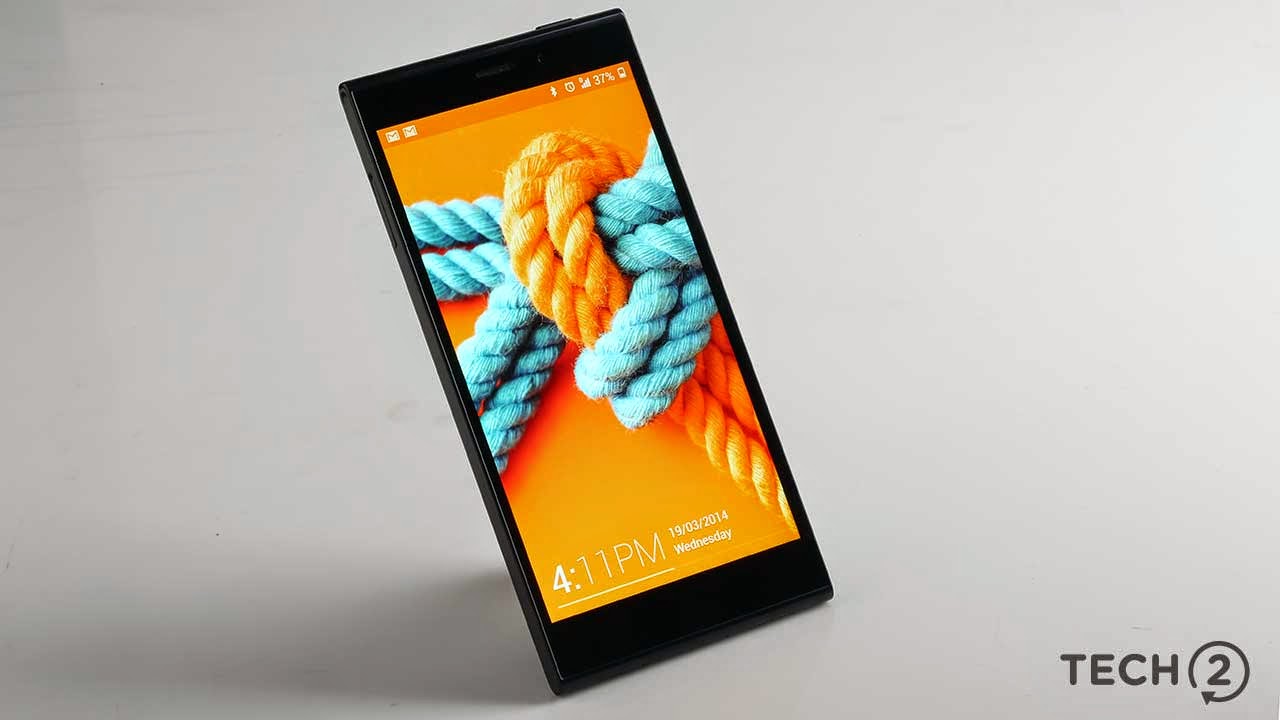
Gionee is talking up the camera capabilities of
the E7, as it happens to be the second Android phone in India with a 16MP
primary sensor (the first being the Samsung Galaxy S4 zoom).

Design and Build
The E7 follows a completely new design
philosophy compared to the E6. The monolithic design consists of a unibody,
polycarbonate shell that’s available in a variety of colours. We’re not
terribly fond of the glossy finish as it’s a nightmare to keep clean.
Thankfully, it doesn’t attract fingerprints as much as you’d expect.
The placement of the buttons isn’t too great
either as the power sits right on the top, which is inconvenient to reach
considering it’s a 5.5-inch display. The phone is incredibly slim and light
though and it won’t weigh you down in your pocket.
We have capacitive buttons in the front along
with an 8MP front-facing camera. There are two symmetrical grills at the bottom
for the speaker and microphone. Around the back, is the brand new 16MP camera
sensor from OmniVision. There isn’t a Xenon flash however, which is a sad
considering a you’d expect the best flash technology in a phone designed for
photography.
Overall, the E7 is a well-crafted handset and
has premium written all over it. The design leaves a lot to be desired however
as it doesn’t really stand out in any way. Also, at 5.5-inches, it can be quite
cumbersome to use.
Features
The Elife E7 features a 5.5-inch, Full HD
display. The IPS panel does a great job at delivering lively colours and sharp
text. Viewing angles and sunlight legibility are also pretty good.
Like the E6, the E7 also features Gionee’s
heavily customised version of Android 4.2.2, which, in a nutshell, is a
complete nightmare to use. It’s hard to use it for more than a couple of days
without risking losing your sanity. All apps are displayed on the home screen
and the redesigned, oversized icons mean it’s hard to spot the app you’re
looking for. There’s no option to have homescreen widgets here, which is really
annoying. The experience is a bit smoother than it was on the E6, I’ll give it
that much. But it’s terrible nonetheless.
The E7 also comes with some ‘Smart Gestures’
like tap-to-wake, smart answer, etc. These work well but we wouldn’t recommend
turning on the tap-to-wake as this feature sporadically woke up the phone while
still in the pocket. I would remove the phone from my pocket, only to find that
I had accidentally sent gibberish text to a friend on Whatsapp. Adding a
pattern lock helps but we didn’t face such an issue on the G2.

The firmware also seems a little unpolished as
we experienced random slowdowns in the animation in certain parts of the
settings menu or the quick dial button beside a contact name would
intermittently stop working. It’s really weird but we noticed some settings
would get enabled or change automatically without any input. For instance,
multiple alarms would get activated, the camera resolution suddenly dropped to
5MP when it has always been on 16MP, etc.
The phone is powered by a Qualcomm Snapdragon
800 SoC and 2GB of RAM. The 32GB version gets 3GB of RAM. As expected, the E7
posts some impressive numbers in benchmarks.
Gionee does bundle along a boat load of apps
with the E7 like a bunch of games, productivity apps, and some of their own
like GioneeXender, NQ Mobile Security, Traffic Assistant, Power Manager, Amigo
Paper and CharmCam.
Media
The E7 features Gionee’s custom audio and video
player. The music player has limited support for codecs as it does not support
FLAC files. However, you might still want to use it as it supports DTS audio
enhancements which make a huge impact on the audio. You can choose the built-in
presets of tweak the setting yourself. Audio quality is good via headphones,
but the loudspeaker isn’t great. At high volumes, there’s severe distortion.
The video player supports a wider selection of
formats including MKV and handles 1080p very well. The DTS enhancements don’t
extend to the video player, sadly. You can grab a screenshot of the video and
even switch to mini mode, which lets you perform other functions while you
continue watching.
Out of the 16GB, you only get 7.8GB for media
files while 5.2GB is reserved for apps. There’s no way to expand the memory either.
Thankfully, Gionee offers a 32GB version as well for not much more, so it
doesn’t make much sense buying the 16GB version, unless you are on a really
tight budget.
Connectivity
The E7 supports quad-band GSM and dual-band 3G
frequencies. You also get Wi-Fi ‘n’, Bluetooth v4.0, GPS and NFC. There’s no
mention of GLONASS support anywhere, so we assume it’s not present. There is
USB Host support however so one can plug in a pen drive to access files. This
worked just fine with a SanDisk 16GB dual drive
Camera
The Elife E7 uses OmniVision’s OV16825 camera
sensor. This 16MP module is packs in larger 1.34µm pixels as compared to
standard camera modules. The backlighting technology is also based on the BSI-2
standard. This particular module is capable of handling 2K and 4K video up to
60fps, however, Gionee hasn’t enabled support for it in the current firmware.
The interface is pretty simple and you can switch between a more general layout
and a professional one for the settings. The features offered aren’t any
different from what we’ve already seen. You have burst mode, HDR, Panorama and
night. ‘V-sign’ mode lets you capture a still automatically when someone puts
up the ‘peace’ sign. The focus speed is pretty quick but if you or your subject
move even slightly, you end up with a blurry shot.
The trouble with the interface is that it’s not
very intuitive. For instance, even in Auto mode, you can’t access burst mode by
simply holding down the shutter. You have to manually switch to ‘Sports’ mode.
Also missing are live filters. Video mode is is pretty basic as well. You can
shoot up to 1080p but there’s no option for slow-motion video.
The front facing camera offers very good
picture quality but sadly video recording is restricted to 720p only. Overall,
the camera manages to capture incredible details and excels at macros and
landscape shots. Low-light and indoor shots are also pretty good.
Gionee also throws in a CharmCam app which adds
more features like beauty shot, frames, etc.
Battery Life
We managed to get pretty good backup time on
the E7 despite its seemingly small 2500mAh battery. The phone breezed through
the loop test with great ease with 20 percent battery to spare.
Verdict and Price in India
The Gionee Elife E7 is available for Rs 26,300
online for the 16B model and about Rs 27,900 for the 32GB model. With such a
minor price gap, it makes sense to pick the 32GB version considering you can’t
expand the storage. What’s more, the 32GB version also comes with 3GB of RAM
instead of 2GB. As far as camera-centric phones are concerned, the E7 is your
best bet at this price point. You also have the Sony Xperia ZR, which is still
a very good camera phone for the price.
Gionee ticks most of the right boxes with the
E7. You get powerful hardware and a very capable camera. The 16MP shooter is
nowhere as good as Sony’s Z1 but is still better than most 13MP shooters out
there. However, there’s still a lot of work to be done when it comes to the
firmware. It just feels unpolished and way too complicated for the average
user. If Gionee can sort this out by sticking to stock Android as much as
possible, then the E7 gets our recommendation.
Source:- Abp News,The
Stateman,Masable,Bartoman,Kolom,Aajkaal,prothom alo technology, Times of India,
BBC, Technology Android, NDTV, News India,Android rap,Tech2, Frist Techtune
with Android,In Technology,Android Gear, CNN, Telegraph, Gaxonn technology
News, Gaxonn News/Tips, Gaxon Health Care, www.gaxon.in
যদি এই পোস্ট তোমার কোনও উপকার বা জ্ঞান অর্জনে এর
কাজে লাগে, তবে তা আমাদের কমেন্ট করে জানাতে পারো। অথবা শেয়ার করো ফেসবুকে। www.gaxon.in / www.gaxonn.blogspot.com
::: Thanks to visit on Gaxonn :::
Subscribe to:
Posts
(Atom)